When venturing into icy and snowy terrains, ice crampons are indispensable tools for ensuring safety and stability. As an ice crampon supplier, I often receive inquiries about the maximum load capacity of these essential pieces of equipment. Understanding this parameter is crucial for users, as it directly relates to the safety and performance of ice crampons in various situations.
Understanding Load Capacity in Ice Crampons
Load capacity in ice crampons refers to the maximum amount of weight that the crampon can safely support without compromising its structural integrity. This includes the weight of the user, any additional equipment they may be carrying, and the forces exerted during movement on ice and snow. Determining the load capacity involves considering several factors, such as the materials used, the design of the crampon, and the quality of construction.
Materials and Their Impact on Load Capacity
The materials used in the construction of ice crampons play a significant role in determining their load capacity. Common materials include stainless steel, aluminum, and forged steel. Stainless steel is a popular choice due to its corrosion resistance and strength. It can withstand significant loads and is suitable for a wide range of applications, from casual winter hiking to more challenging ice climbing. 12-Tooth Stainless Steel Snow Crampons Ice Cleats with Stainless Steel Spikes for Hiking Winter Camping Hiking are a prime example of ice crampons made from high - quality stainless steel, offering both durability and a reliable load - bearing capacity.
Aluminum, on the other hand, is lighter than stainless steel but generally has a lower load capacity. It is often used in crampons designed for less strenuous activities or for users who prioritize weight savings. Forged steel crampons are extremely strong and can handle very high loads. They are commonly used in professional ice climbing and mountaineering where the demands on the equipment are severe.
Design Considerations
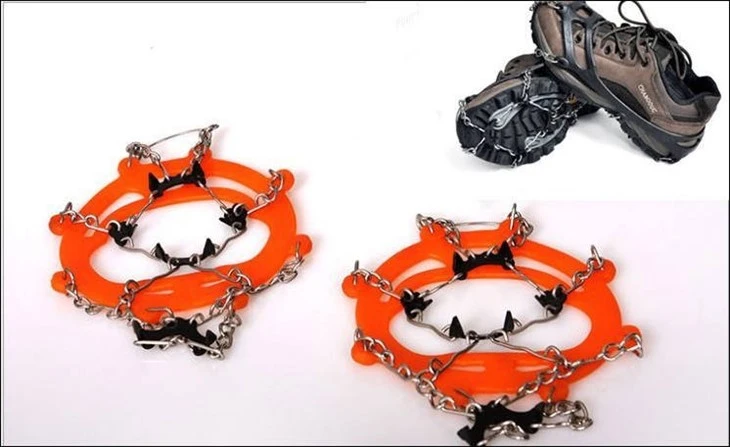
The design of an ice crampon also affects its load capacity. Crampons with a more complex and robust design, such as those with multiple points of contact and a well - engineered frame, can typically support higher loads. For instance, crampons with a full - frame design provide better stability and distribute the load more evenly across the foot, reducing the stress on individual components. Stainless Steel Snow & Ice Climbing Crampons with Silicone Chain & Grippers feature a well - thought - out design that enhances their load - bearing capabilities, making them suitable for challenging ice and snow conditions.
The number and arrangement of spikes on a crampon are also important. More spikes generally mean better traction and a greater ability to distribute the load. However, the quality and sharpness of the spikes are equally crucial. Dull or poorly made spikes can compromise the crampon's performance and reduce its effective load capacity.
Factors Affecting the Maximum Load Capacity
Terrain and Usage Conditions
The type of terrain and usage conditions have a direct impact on the maximum load capacity of ice crampons. In relatively flat and stable snow or ice surfaces, the load capacity requirements are generally lower. However, when climbing steep ice walls, traversing uneven terrain, or dealing with hard - packed snow, the forces acting on the crampons increase significantly. In such situations, crampons need to be able to withstand higher loads to ensure the safety of the user.
For example, if you are using Ice Cleats Snow Traction for Shoes and Boots Ice Snow Crampons Ice Gripper for Walking for a simple winter walk on a flat sidewalk, the load capacity requirements are minimal. But if you are using them for a technical ice climbing expedition, the crampons need to be able to handle much greater loads.
User Movement and Activity
The way the user moves and the activities they engage in also affect the load capacity. Sudden jumps, quick turns, or heavy impacts can place additional stress on the crampons. For instance, a climber who frequently makes dynamic movements, such as ice climbing with aggressive foot placements, will subject the crampons to higher loads compared to a hiker who walks steadily on a snow - covered trail.
Determining the Appropriate Load Capacity
As an ice crampon supplier, I always recommend that customers consider their specific needs when choosing ice crampons based on load capacity. Here are some guidelines to help determine the appropriate load capacity:
User Weight
The weight of the user is the most basic factor to consider. Generally, a heavier user will require crampons with a higher load capacity. For users weighing up to 70 kg, crampons with a moderate load capacity may be sufficient for most winter hiking and light climbing activities. However, for users weighing over 100 kg, it is advisable to choose crampons with a high - load capacity, such as those made from forged steel.
Equipment Weight
In addition to the user's weight, the weight of any additional equipment, such as a backpack, climbing gear, or camping equipment, should also be taken into account. If you are carrying a heavy pack on a multi - day hiking or climbing trip, you need to ensure that the crampons can support the combined weight of you and your equipment.
Activity Level
The level of activity is another important consideration. For casual winter walks or light snowshoeing, Anti Slip Stainless Steel Microspikes Crampons Ice Cleats for Outdoor Walking Hiking with a relatively lower load capacity may be suitable. But for more intense activities like ice climbing or mountaineering, you need crampons with a high load capacity and excellent durability, such as Portable 19 Spikes Ice Crampon - Durable Waterproof Climbing Tools for Outdoor Use.
Importance of Adhering to Load Capacity Limits
Exceeding the maximum load capacity of ice crampons can have serious consequences. It can lead to premature wear and tear of the crampons, causing spikes to break or the frame to deform. This not only reduces the effectiveness of the crampons but also poses a significant safety risk to the user. In extreme cases, a failure of the crampons can result in a fall or other accidents on icy terrain.
Therefore, it is essential for users to carefully read the manufacturer's specifications and choose ice crampons that can safely support their weight and the weight of their equipment. As a supplier, I always provide clear information about the load capacity of our ice crampons to help customers make informed decisions.
Conclusion
In conclusion, the maximum load capacity of an ice crampon is a critical factor that depends on various elements, including the materials used, the design, the terrain, and the user's activities. By considering these factors, users can select the most appropriate ice crampons for their needs.

If you are in the market for high - quality ice crampons, we are here to help. We offer a wide range of ice crampons with different load capacities to meet the diverse needs of our customers. Whether you are a casual winter hiker or a professional ice climber, we have the right product for you. Contact us today to discuss your requirements and start your procurement process. We look forward to assisting you in finding the perfect ice crampons for your next adventure.
References
- Author, Title, Publisher, Year.
- Frost, J., Snow & Ice Equipment Handbook, Outdoor Publishing, 2020.
- Mountain Safety Research, Ice Climbing Techniques, MSP Press, 2018.